
Get Your Free Cash Offer Now!
Fill out this form to get your no-obligation all cash offer started!
"*" indicates required fields
How Ohio Property Tax Delinquency Becomes Tax Foreclosure
Ohio property taxes are administered at the county level. Each county treasurer handles billing, collection, and the initial delinquency process. When a property owner falls behind, the path to tax foreclosure runs through several stages:
- Year 1 — initial delinquency. The first missed installment triggers late fees and interest. The county treasurer sends a delinquency notice. The amount due grows month by month.
Year 2 — continued delinquency, potential tax lien sale. Some Ohio counties — including Cuyahoga and Franklin — operate tax lien sale programs that sell tax liens to private investors. The investor pays the county the delinquent amount and acquires the right to collect from the homeowner with interest. This is often the first time a third party becomes involved in the situation. - Year 2 or 3 — DTAC process. The Delinquent Tax Assessment Collection process is run by the county prosecutor's office. The prosecutor sends a formal demand and notice of intent to foreclose. The homeowner can typically enter a payment plan at this stage if they have the income to support it.
- Year 3 or later — tax foreclosure complaint. If the delinquency is not resolved, the county prosecutor files a tax foreclosure complaint in the county court of common pleas. The case follows the same general procedural path as a mortgage foreclosure under ORC § 2323.07 — answer period, discovery, motion practice, judgment, sheriff's sale — but with the county as the moving party and the delinquent taxes as the underlying debt.
- Sheriff's sale or Land Bank transfer. The property is sold at sheriff's sale under the same ORC § 2329.20 (two-thirds minimum bid) and ORC § 2329.52 (second sale, no minimum bid) rules that apply to mortgage foreclosures. In counties with active land banks — Cuyahoga, Lucas, Mahoning, Summit, and others — properties that do not attract investor bids often transfer to the land bank for stabilization or demolition.
Why Tax Foreclosures Are Surging in Ohio in 2026
Several factors are converging in 2026 to accelerate the Ohio tax foreclosure pipeline:
- 2024 county reappraisals. Ohio counties conduct reappraisals on a 6-year cycle, with a 3-year update in between. The 2024 reappraisals in Cuyahoga, Franklin, Hamilton, Montgomery, and several other counties pushed assessed values significantly higher to reflect post-pandemic home price gains. Tax bills reflecting those new values began arriving in 2025 and 2026.
- Senior homeowner pressure. Ohio's homeowner population skews older than the national average in many counties, and the cohort of homeowners aged 67 and older that owns property mortgage-free has been growing for the past decade. This cohort is the most exposed to property tax increases because they have no offsetting mortgage payment that could be modified or refinanced. They either pay the new tax bill out of fixed income, qualify for available exemptions and assistance, or fall behind.
- Aggressive treasurer enforcement in some counties. Montgomery County's Treasurer John McManus has driven steady increases in tax foreclosure activity since 2020. Cuyahoga County's DTAC program has been active throughout that period. The discretion treasurers have in pacing enforcement varies by county and produces uneven foreclosure intensity across Ohio.
- End of pandemic-era forbearance. Federal and state programs that paused tax enforcement during the COVID-19 emergency wound down in 2022 and 2023. The backlog of cases that accumulated during that pause is now flowing through the courts.
The Senior-Owner Tax Foreclosure Pattern
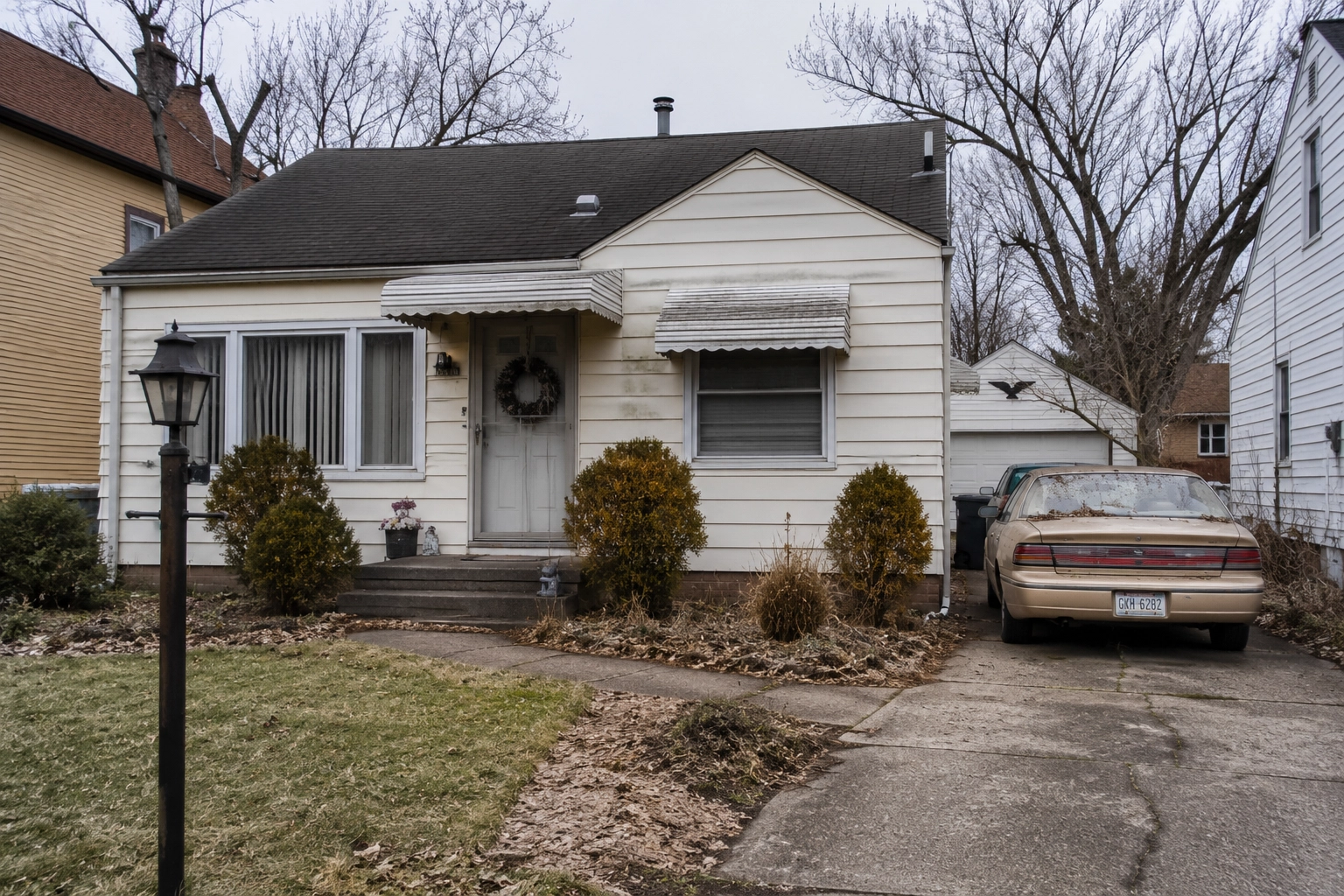
A distinct subgroup of Ohio tax foreclosure cases involves senior homeowners who own their property outright but have fallen behind on taxes. The pattern is consistent across Cuyahoga, Summit, Stark, Mahoning, Montgomery, and Hamilton counties:
- Long-term ownership. The homeowner bought the property 25 to 50 years ago, paid off the mortgage, and has been retired for several years.
- Fixed-income compression. Social Security plus a small pension or retirement account provides $1,800 to $3,500 per month in income. Property taxes that were $2,400 a year a decade ago are now $4,800 a year and rising.
- Isolation and avoidance. The homeowner has been receiving delinquency notices but has not engaged with the treasurer's office. Family members may not know. The mail accumulates.
- Equity locked in the home. The property is mortgage-free and worth $150,000 to $300,000. Selling for fair value would provide more than enough resources to pay off the tax delinquency, fund a smaller rental or assisted-living arrangement, and leave a meaningful inheritance for family.
- Tax foreclosure pressure builds quietly. The county prosecutor's office moves on the case after the statutory delinquency threshold is met. The homeowner is suddenly confronting the possibility of losing the home to tax sale and recovering significantly less than fair value.
For this homeowner, the right answer is often a fair-value cash sale that pays off the tax delinquency at closing and provides the homeowner with the proceeds to fund the next chapter. Honest Offer Homes routinely closes these transactions and works with adult children, social workers, attorneys, and county case managers who are involved in the situation.
What Sellers in Cleveland Say About Honest Offer Homes

"I needed to sell fast, and they made it simple."
I relocated for work and didn't want to list it. Honest Offer Homes closed quickly and handled everything.

Sarah R., Cleveland

Mike L., Cleveland
"They gave me a fair offer for my rental."
Tenants left the place in bad shape. I didn't have time or money to fix it. They still bought it fast.

Denise T., Cleveland
I inherited a house I didn't want. They were professional and easy to work with.
I inherited a house I didn't want. They were professional and easy to work with.
What Can Be Done at Each Stage of Tax Foreclosure
- Year 1 delinquency: contact the county treasurer to enter a payment plan. Most counties offer some form of installment arrangement. Cuyahoga County's EasyPay program is one example.
- Tax lien sale stage: contact the lien purchaser to negotiate payoff terms. The lien typically must be redeemed within a statutory window. Ohio Legal Help (ohiolegalhelp.org) provides guidance on tax lien redemption.
- DTAC notice received: contact the county prosecutor's tax division and request a payment plan. Many counties accept reasonable plans before formally filing the foreclosure complaint.
- Tax foreclosure complaint filed: file an answer within the 28-day window. Contact Ohio Legal Help. Consider whether a fair-value sale could pay off the delinquency and preserve the homeowner's equity.
- Senior homeowners — investigate exemptions and assistance programs. The Ohio Homestead Exemption (ORC § 323.152) provides property tax reductions for homeowners 65 and older meeting income thresholds. Cuyahoga County's expanded property tax assistance program for homeowners 67-plus provides up to $10,000 in delinquency relief. Save the Dream Ohio at savethedream.ohiohome.org provides housing counseling resources for Ohio homeowners.
If You Are Selling an Ohio Home With Tax Delinquency
A property with tax delinquency can still be sold cleanly. The delinquent taxes are paid off at closing from the sale proceeds, the same way a mortgage payoff works. The buyer receives clean title. The seller receives the net proceeds after taxes, fees, and any other liens are satisfied.
For Ohio homeowners who have accumulated multiple years of tax delinquency, the sale math is often more favorable than expected. Suppose a $180,000 Cleveland home has $11,000 of accumulated tax delinquency plus $3,200 in accrued interest and fees. A cash sale at $170,000 (typical at this stage) produces:
$170,000 sale price minus $14,200 tax payoff minus standard closing costs absorbed by buyer = approximately $155,800 to the seller. Versus the alternative — letting the property go through tax foreclosure, where the property typically sells at sheriff's sale for the tax amount plus a modest premium, the homeowner gets nothing, and a foreclosure record remains on credit for 7 years.
→ Read: Ohio Tax Foreclosure — When the County Takes the House
Cross-Reference: Inherited Property With Tax Delinquency
A significant share of Ohio tax foreclosure cases involve inherited properties — usually a parent's home where the heir has been managing the estate but has not stayed current on taxes. Our Campaign 1 piece on inherited Cleveland homes that need major repairs covers the as-is purchase logic that often applies. If the inherited property has both repair issues and tax delinquency, the cash sale path resolves both situations in a single closing.
→ Read: You Inherited a House in Cleveland That Needs Major Repairs
Frequently Asked Questions
1. How long does the Ohio tax foreclosure process take?
Ohio tax foreclosure typically requires at least 2 years of property tax delinquency before the county begins formal enforcement. From the tax foreclosure complaint filing to sheriff's sale, the case follows the same general timeline as mortgage foreclosure under ORC § 2323.07 — 6 to 12 months in most counties, 9 to 14 months in Cuyahoga and Franklin.
2. Can I sell my Ohio house with tax delinquency?
Yes. A property with tax delinquency can still be sold cleanly. The delinquent taxes are paid off at closing from the sale proceeds, similar to a mortgage payoff. The buyer receives clean title, and the seller receives the net proceeds after taxes, fees, and any other liens are satisfied. For a senior homeowner with mortgage-free property and accumulated tax delinquency, a fair-value sale often produces significantly better outcomes than letting the property go to tax sale.
3. What tax assistance is available for Ohio senior homeowners?
The Ohio Homestead Exemption (ORC § 323.152) provides property tax reductions for homeowners 65 and older meeting income thresholds. Cuyahoga County's expanded property tax assistance program for homeowners 67-plus provides up to $10,000 in delinquency relief. County treasurers also operate payment plan programs like Cuyahoga's EasyPay. Save the Dream Ohio at savethedream.ohiohome.org provides housing counseling resources.
4. Why are Ohio tax foreclosures increasing in 2026?
Ohio tax foreclosures rose 370% statewide from mid-February to early April 2026 according to a Dayton Daily News analysis of Ohio Supreme Court filings. The drivers include 2024 county reappraisals that raised assessed values significantly, fixed-income pressure on senior homeowners, the end of pandemic-era enforcement pauses, and accelerated treasurer enforcement in counties like Montgomery and Cuyahoga.
Get Your Free Cash Offer Now!
Fill out this form to get your no-obligation all cash offer started!
"*" indicates required fields
Honest Offer Homes and Ohio Tax Foreclosure
We close tax-delinquent Ohio properties regularly. We pull the property's tax history through the county auditor's website, confirm the payoff amount needed to clear the delinquency at closing, and structure the transaction so all liens are paid in full from the sale proceeds. The seller receives a clean closing statement showing exactly where every dollar went. We do not pressure homeowners — particularly senior homeowners — to make decisions on a timeline that does not respect their situation. We make the offer, we explain the math, and we let the homeowner decide.
If you are facing Ohio tax foreclosure or have a property with accumulated tax delinquency and want to understand your options, send us the address. We will come back within 48 hours with a real cash offer and a clear breakdown of the math.